Point of Interest
Pisan Fortress
Orari
April 1–June 14, 2026:
- Open daily from 9:30 a.m. to 1:00 p.m.; closed on Sundays.
From June 15:
- Mon–Sat: 9:30–13:00 and 15:30–18:00 (closed Wednesday morning)
- Evening opening on Monday & Wednesday: 21:00–22:30
- Sunday: closed
Dove
Marciana, Isola d'Elba
Located at the very top of the ancient village of Marciana, 415 metres above sea level, the Fortezza Pisana is one of the most evocative places in the entire Tuscan Archipelago and the historical landmark of the western part of the Island of Elba. A monument that tells centuries of history through its walls, its bastions and a view that takes your breath away.
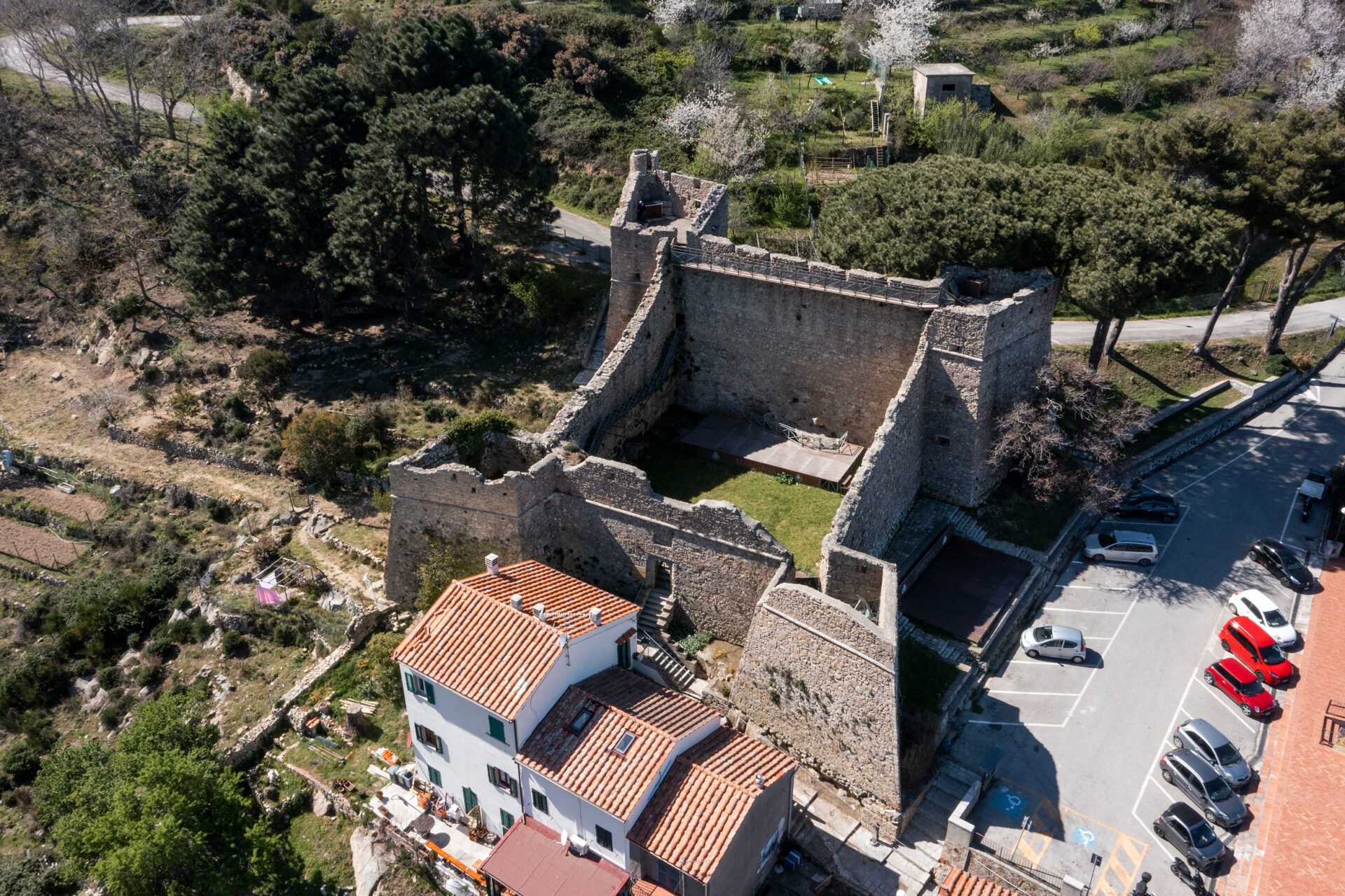
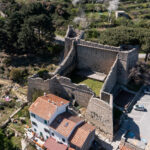
Presumably built by the Pisans in the 12th century, the Fortress dominates the historic centre of Marciana and the wide valley below. Between 1450 and 1457 the Appiani family, lords of the Principality of Piombino, strengthened it when they established Marciana as the centre of their interests on the island. The structure we see today dates mainly from the works of 1560, documented in the records of the time — roughly the same years in which the Grand Duchy of Tuscany was building Cosmopoli on the other side of the island, the present-day Portoferraio.
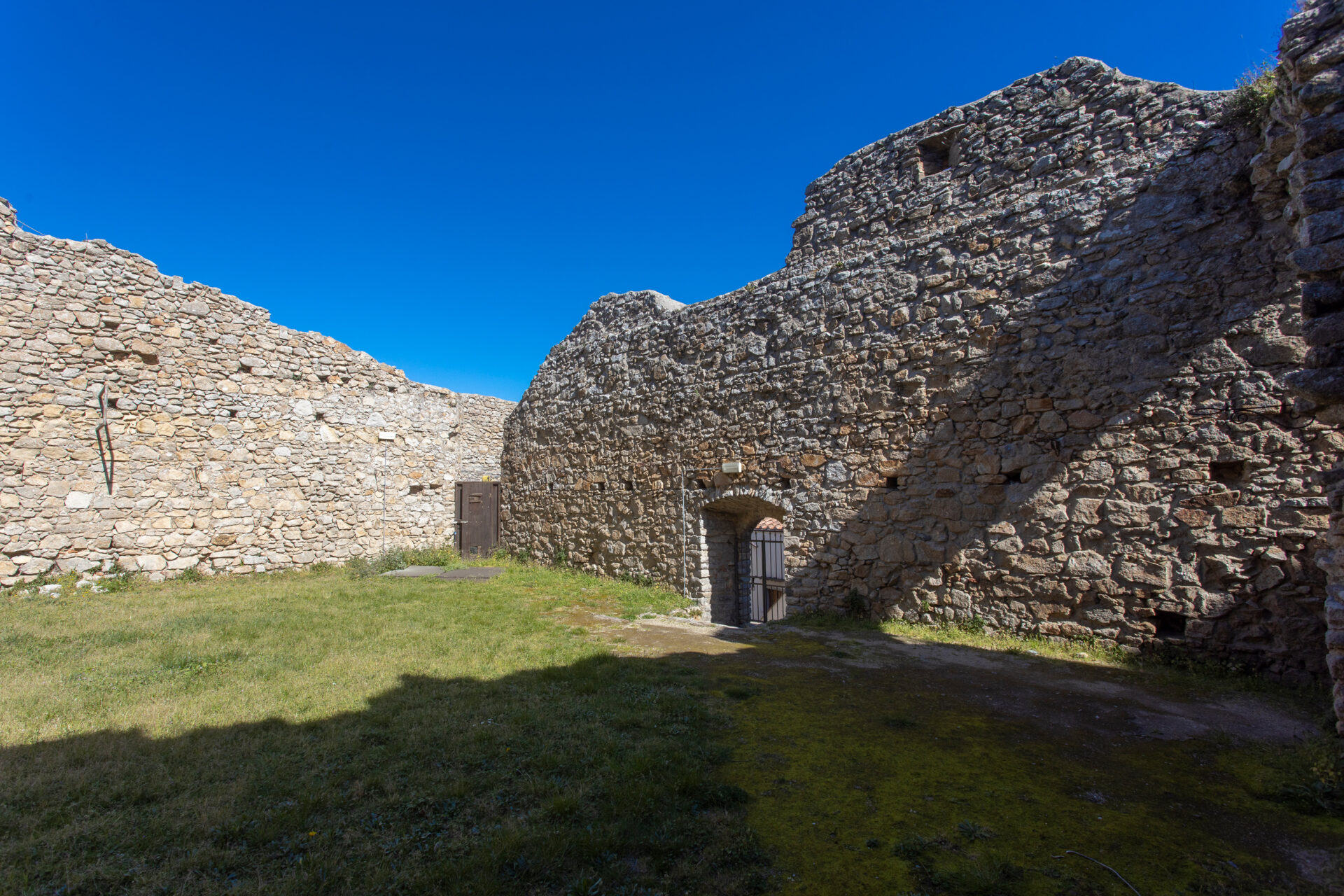
The fortress has a quadrangular plan with four corner bastions, mostly open to the sky. The southern bastion, once a depot for explosives and ammunition, still houses a cylindrical sentry box for surveillance, with a direct line of sight towards the Fortezza del Volterraio. On the western side there is a cistern fed by an underground aqueduct that, in case of siege, ensured a reserve of fresh water for the garrison.
A defensive stronghold overlooking the village of Marciana and the valley below, with a sweeping view over the western side of the island.
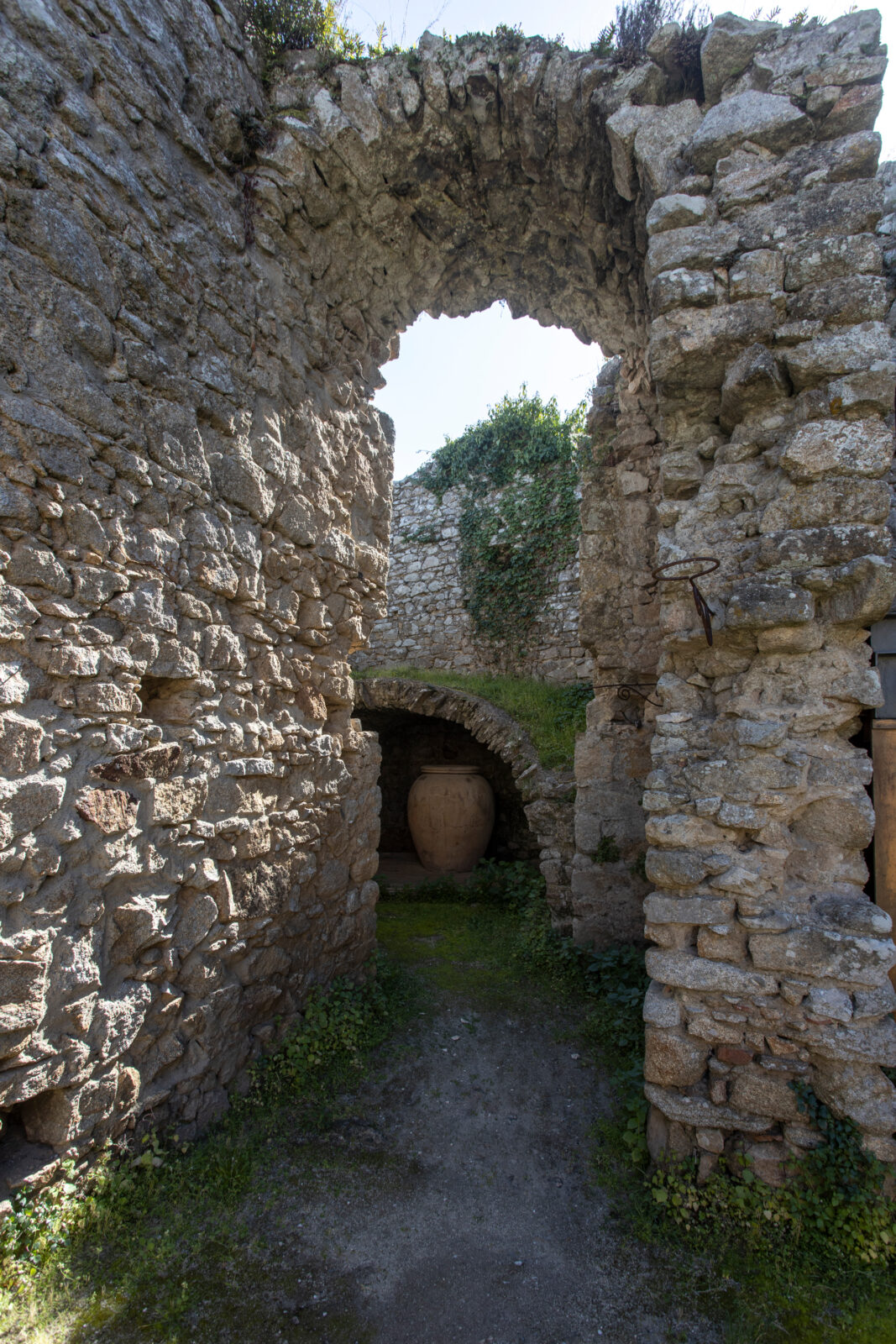
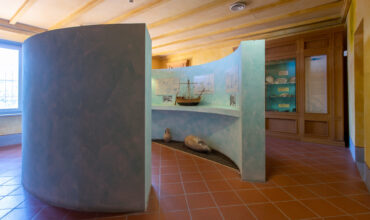
In the inner courtyard, open to the sky and surrounded by the walls, there is a stage for summer events and performances. Inside one of the bastions stands an extraordinary object: a Dolia, the large ceramic jar that the Romans used to store and ferment wine. Discovered in the 1970s during excavations at the nearby Etruscan fortress of Monte Castello di Procchio, it is a piece that carries millennia of productive history of the island.
The Fortezza Pisana has been the subject of an important research project by the Department of History, Drawing and Restoration of Architecture at Sapienza University of Rome. Using laser scanner surveys and drone flights, researchers have created a precise three-dimensional digital model of the structure, which today allows visitors to explore the Fortress through new displays and innovative tools, reliving its different historical periods in an entirely new way.
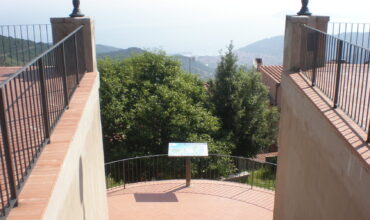
Access to the Fortress is through a stone staircase that leads into the heart of the structure. From here the corner bastions open up, offering a sweeping view over the Gulf of Marciana Marina, the mountains of Elba and, on the clearest days, as far as Capraia and Corsica. The visit is enriched by illustrated panels, video stations and tactile trails that make the experience engaging for everyone.
Please note that the upper-level walkway is currently not accessible.
Info
Tickets
- Ticket (combined admission to the Fortress, Archaeological Museum, and Mint): €7.00 (free for children 14 and under)
- School groups from outside Elba: €2.00 (per person)
- School groups from Elba: free admission
How to get there
When you arrive in the town of Marciana, you can park in the square in front of the fortress. The fortress can be entered from a small gate.
To Learn More
Bibliography
- V. Anselmi, G. A. Vieri (eds.), Musei dell’Arcipelago Toscano. Un mare di cultura, storia e natura, Persephone Edizioni, 2025.
- T. Empler (ed.), Le emergenze storico architettoniche nel versante occidentale dell’Isola d’Elba. Tra il X e il XX secolo, Quine, Milano, 2024.
- T. Empler, F. Quici, A. Caldarone, E. D’Angelo, A. Fusinetti, M. L. Rossi, HBIM e ICT. Il BIM per la valorizzazione della Fortezza Pisana di Marciana, in Proceedings of the 43rd International Conference of Representation Disciplines Teachers, FrancoAngeli, Milano, 2022.
- M. Camici, L’Elba tra Medioevo e Rinascimento. Viaggio alla scoperta di un’isola, Ginevra Bentivoglio Editorial, Roma, 2009.